Stop hiring around manual finance work
Orka AI & Automation helps SME finance teams cut the repetitive manual work that eats hours every week — practical tools built around real finance processes, connected to the systems you already use.
Most builds are a few thousand pounds, fixed before we start, plus a predictable monthly subscription — no retainer, no open-ended scope.
Built on Orka's finance recruitment insight since 2014 — with live tools already supporting Brakspear across CIS, supplier statement reconciliation and expenses.
Finance teams are stretched. Hiring isn't always the fix.
Headcount is tight. Systems don't always talk to each other. Spreadsheets fill the gaps. Good people lose hours every week to checking, copying, reconciling and rekeying.
Sometimes the answer is a hire. Sometimes the process needs fixing. Sometimes the work should be automated. We'll tell you honestly which one you're looking at.
Try it: think of one task your team does every week
Three tools already doing the work. Not generic AI theatre.
Each of these is in production with a real finance team right now — reading documents from a dedicated inbox, applying the rules, and leaving people only the judgement calls.
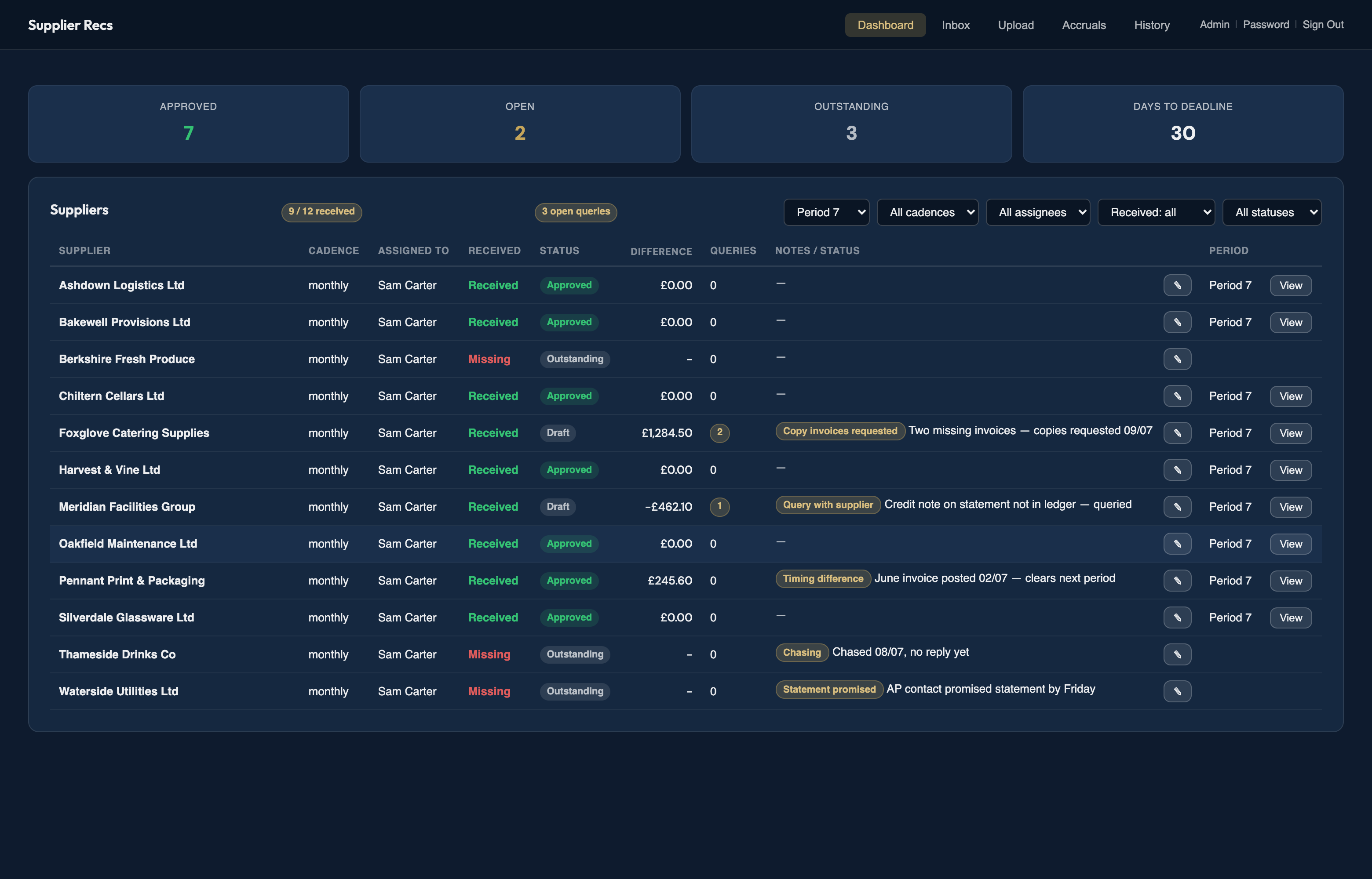
Supplier statement reconciliation
Suppliers email statements to a dedicated inbox. Every line is matched against your ledger, and your team reviews the exceptions — not the whole statement.
- PDFs, spreadsheets, scans and photos
- Missing statements chased automatically
- Excel workbook out, every period
Real product — demonstration data.
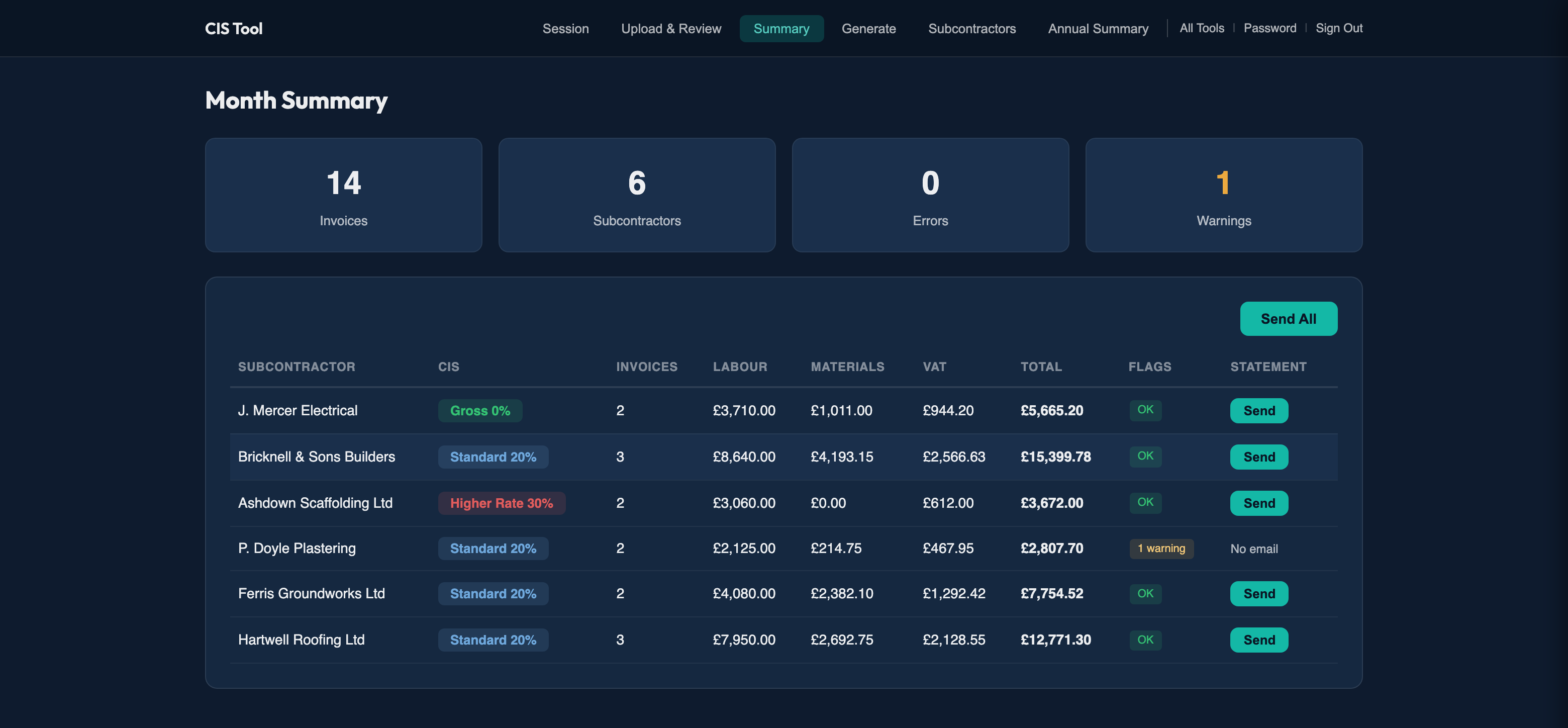
CIS deduction statements
Subcontractor invoices are read the moment they arrive, the right deduction is applied — 20%, 30% or gross, labour only — and every statement is emailed for you.
- Invoices read straight from your inbox
- Duplicates and mismatches flagged, never silent
- Return figures ready for your CIS300
Real product — demonstration data.
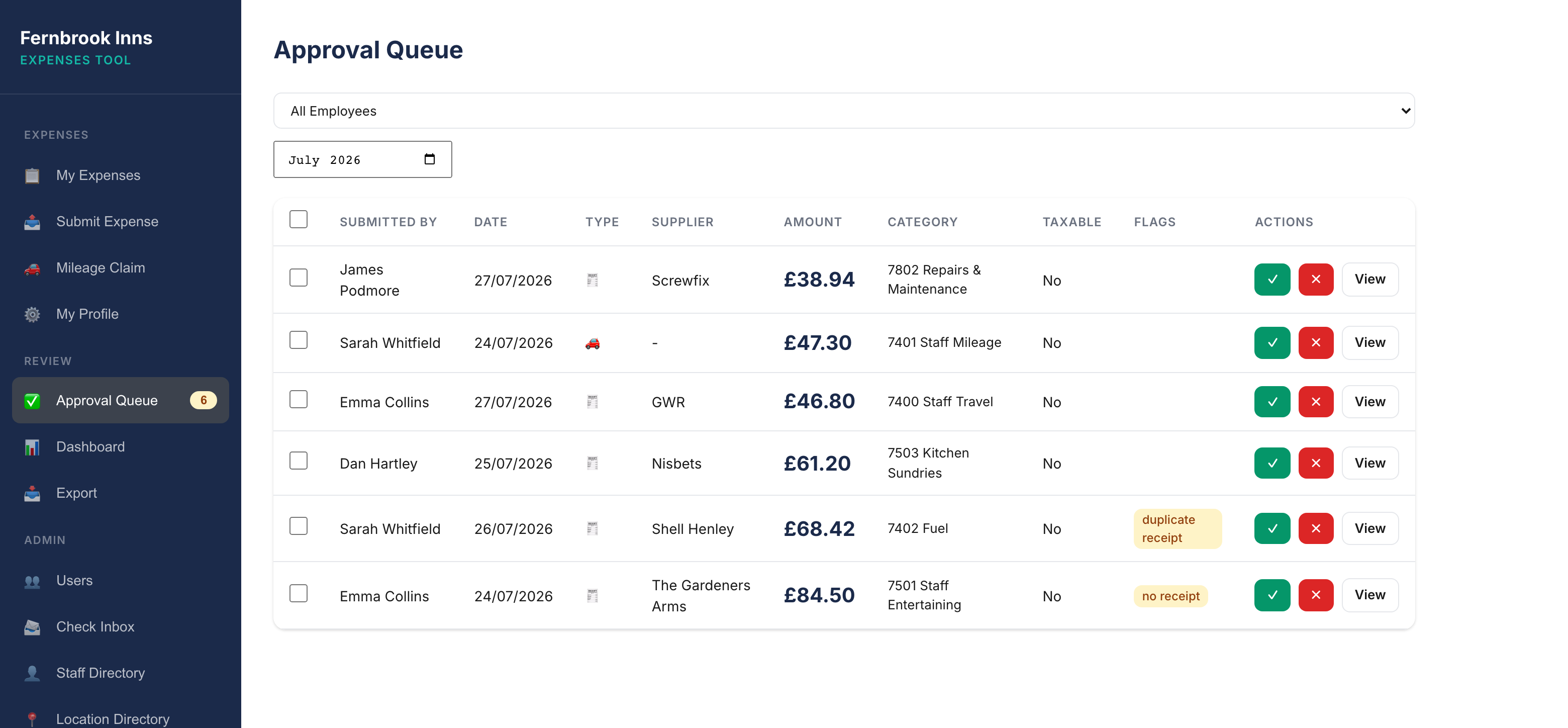
Expense management
Receipts and mileage claims are captured, coded and checked — VAT, duplicates, policy — so reviewers work a clean approval queue instead of a shoebox.
- Receipts read from email or phone photo
- Duplicate and missing-receipt flags built in
- Payroll-ready export at month end
Real product — demonstration data.
Credit card recs
Cut the manual chase across transactions, receipts and coding so the month-end rec stops being a slog.
Month-end reporting
Reduce the copying, pasting and recurring spreadsheet preparation that swallows the first week of every month.
Finance inboxes
Read, classify and route the recurring documents and requests that land in a shared finance mailbox.
Already doing the work. Not a roadmap.
“The tools Oli built have delivered significant value to our business, streamlining processes and saving considerable time.”
W. H. Brakspear & Sons — the family-run Henley-on-Thames brewer and pub company, trading since 1779 with an estate of around 125 pubs — runs its CIS deductions, supplier statement reconciliation and expenses through Orka AI & Automation: practical tools built around the work the finance team was already doing every month.
Scope first. Build only if it makes sense.
Scoping call
A short conversation to understand the process, the volume, the systems, the pain and the commercial context.
Workflow review
We work out whether the answer is people, process or automation — and say so plainly.
Fixed build proposal
If automation makes sense, you get a clear fixed-price quote before anything is built.
Build and support
We build, deploy, improve and support the tool over time as part of your subscription.
The things finance teams ask first.
Who owns the tools you build?
We retain the intellectual property in every tool, and you have full access to use it for as long as your subscription runs. Keeping the underlying product ours is what lets us configure proven components for your team rather than rebuilding from scratch each time — which means faster delivery and a better tool than a one-off build would be.
What happens to our data?
Your data stays yours. Each client runs in its own isolated environment — we don't share data between clients — and our terms of business, prepared by Harper James, include full data protection provisions. We're happy to walk your team, or your IT contact, through the detail.
Do we need IT involved to get started?
Not for day-to-day use. We handle the setup, hosting and deployment ourselves. If a tool needs access to one of your systems — your accounting platform, say — we'll work with whoever manages that to get it connected, but running the tool doesn't need IT support.
How long does it take?
Most tools are built, tested and deployed in two to four weeks, and simpler ones can be ready in days. It mainly depends on the process and how quickly we can get sample data and configuration details from your team.
Got manual finance work your team hates?
If it happens repeatedly, follows a pattern and takes too much time, it's worth a 30-minute scoping conversation.